In food processing environments, the act of moving product is rarely neutral. Conveying systems exert forces that can subtly or dramatically alter product quality before it ever reaches packaging. For processors handling fragile or irregular ingredients such as cereals, grains, nuts, frozen foods, pet food, or specialty powders, these forces can translate into breakage, dust generation, inconsistent flow, or contamination risks. As food safety requirements tighten and product differentiation increasingly depends on appearance, texture, and uniformity, conveyance has become a critical point of control rather than a background utility. For many processors, this has elevated gentle, controlled conveying from a ‘nice to have’ to a core design requirement.
This shift has driven renewed attention toward conveying technologies designed to not just transport material efficiently, but to do so gently, hygienically, and predictably across complex plant layouts. Among these, modern tubular drag conveying systems illustrate how mechanical design choices, cable construction, disc materials, sealing strategies, and cleaning access directly influence both product integrity and operational resilience.
Why Gentle Handling Matters More Than Ever
The consequences of aggressive or poorly controlled conveying are cumulative. Minor abrasion at transfer points can break products down into fine particles that alter bulk density or create dust hazards. Those seemingly minor changes can cascade into off-spec batches and housekeeping challenges. Repeated impacts can fracture fragile pieces, degrade visual appeal, and can introduce variability that complicates downstream weighing or blending. Over time, these effects erode yield and consistency, even if no single failure is dramatic enough to trigger immediate corrective action.
Gentle handling is therefore less about moving slowly and more about moving intentionally. Conveying systems must maintain steady, controlled motion that minimizes differential forces within the product stream. Cable-driven tubular drag systems embody this principle by maintaining steady, cable-pulled motion around bends and elevation changes without relying on high velocities or abrupt transfers. This is particularly important when ingredients vary in size, shape, or moisture content, as uneven flow can lead to segregation or bridging. A system engineered for gentle conveyance treats the product as something to be preserved, not simply moved.
Sealed Conveyance, Hygienic Design, and Practical Cleanability
In parallel with growing concerns around product quality, food processors face escalating expectations related to sanitation and environmental containment. Open conveying methods, such as belts or bucket elevators, introduce multiple exposure points where products can escape or where airborne contaminants may enter the product stream. Even when guarded or partially enclosed, these systems often rely on external housekeeping and frequent manual intervention to maintain acceptable hygiene levels, increasing both labor demands and variability in sanitation outcomes.
Fully enclosed conveying designs address many of these risks at the source. By sealing the product path from inlet to discharge, they limit exposure to the surrounding environment, prevent ingredient loss, and reduce the number of surfaces that require secondary cleaning. In practice, this often translates into shorter changeovers and less time spent cleaning surrounding equipment and floors. Just as importantly, enclosure simplifies validation. When the product only contacts defined, cleanable internal surfaces, sanitation protocols become more repeatable, auditable, and easier to align with food safety and quality programs. For processors managing multiple recipes, this containment can significantly reduce the complexity and downtime associated with changeovers, shifting sanitation efforts away from entire rooms or conveyor corridors and back to the conveying system itself.
However, enclosure alone is not sufficient. Cleaning requirements vary widely across food applications, with some operations relying primarily on dry cleaning while others require frequent wet cleaning to manage carryover. Conveying systems must therefore support a range of sanitation strategies without forcing processors into rigid, one-size-fits-all procedures. Designs that incorporate modular cleaning tools, such as wiper flights, scraper discs, brushes, or sponge elements, allow sanitation methods to be tailored to specific products, risks, and production schedules.
In wet clean applications, the ability to flood, rinse, and dry the conveying path without disassembly can dramatically reduce labor and shorten sanitation windows. Features such as integral drains and sealed connections further support Clean-In-Place (CIP) protocols by eliminating areas where moisture or residue might accumulate. When these capabilities are engineered into the system architecture from the outset, sanitation becomes a predictable, controlled process rather than a reactive response to contamination concerns. It also helps processors avoid unplanned downtime tied to failed inspections or inconsistent manual cleaning.
Friction, Wear, and the Hidden Costs of Poor Flow Control
Even in enclosed systems, internal friction remains a primary driver of maintenance and downtime. As the product moves through horizontal runs and directional changes, resistance between the conveying elements and the tube wall accumulates. Excessive friction accelerates wear, increases power demand, and can lead to cable stretch or component failure if not properly managed.
Modern tubular drag conveyors address this through material selection and geometry. Self-lubricating ultra high molecular weight polyethylene discs, for example, reduce contact friction while maintaining enough surface engagement to move product efficiently through bends, where resistance and wear are typically highest. Lower friction not only extends component life but also greatly diminishes unexpected downtime and the frequency of component replacement, stabilizing conveying behavior and reducing the likelihood of surging or inconsistent discharge rates. By minimizing wear at these points, processors can reduce unexpected downtime for component replacement and cable adjustments.
This focus on internal mechanics highlights an often-overlooked truth: gentle conveying is as much about protecting the equipment as it is about protecting the product. Systems designed to operate smoothly under sustained load demand less corrective maintenance and offer more predictable uptime.
Flexibility, Integration, and the Long View of Sanitary Conveying
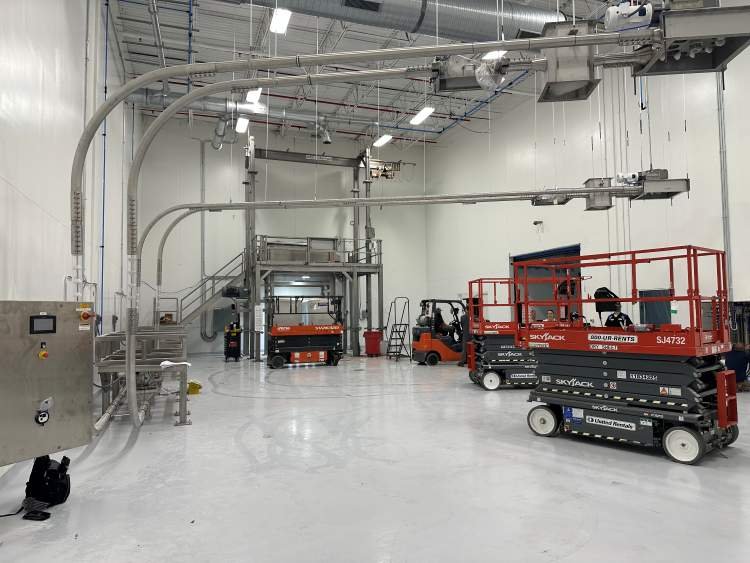
Few food processing facilities are designed around straight lines, and fewer remain static over time. Conveying systems must navigate elevation changes, structural constraints, and evolving production demands while maintaining consistent performance and hygienic integrity. Technologies that support circuitous routing, allowing conveyors to move horizontally, vertically, and around obstacles, give engineers greater freedom to design layouts that respond to real world conditions rather than forcing processes to conform to rigid equipment footprints.
This flexibility has implications beyond spatial efficiency. When a single enclosed conveyor can replace multiple open belts or bucket elevators, processors reduce transfer points, simplify control logic, and limit the number of surfaces exposed to the production environment along the entire conveying circuit. For example, a cereal producer might consolidate several bucket elevators and horizontal belts into a single CablePro™ loop that threads through existing structures while maintaining gentle handling. Fewer transitions mean fewer opportunities for product loss, contamination, and mechanical wear, all of which contribute to more predictable sanitation routines and long-term reliability.
In this context, cable-driven tubular drag conveyors have gained traction because they pair routing flexibility with fully enclosed, hygienic construction. Systems such as Hapman’s CablePro™ Tubular Drag Conveyor illustrate how these attributes can be integrated without compromising gentle handling or cleanability. By combining sealed stainless-steel tubing with a pre-stretched, food-grade coated cable and low-friction UHMW discs, the system maintains steady product movement through complex paths while minimizing internal wear. Features such as automatic cable tensioning further stabilize performance over time, reducing maintenance interventions that can disrupt production schedules and compromise overall line availability.
Equally important is how these systems support varied sanitation strategies. The ability to configure dry or wet cleaning accessories, along with sealed connections and integral drains, allows processors to align cleaning protocols with specific product risks and operational rhythms rather than forcing every operation into the same sanitation model. In practice, this adaptability can shorten changeovers, reduce downtime, and improve confidence in sanitation outcomes.
Stepping back, the value of flexible, enclosed conveying is not tied to any single feature or product. It reflects a broader shift in how processors evaluate material handling decisions. Conveying systems are no longer judged solely by throughput or horsepower, but by how well they protect product quality, support food safety programs, and adapt as facilities grow or change. Equipment that can move gently, clean thoroughly, and integrate seamlessly into complex layouts becomes an enabler of long-term operational resilience rather than a constraint. For processors facing tightening food safety regulations and pressure to maintain product quality while running harder and longer, systems like CablePro™ are positioned to help them stay ahead, delivering gentle, enclosed conveyance with cleaning regimes that can adapt as products, allergens, and regulatory requirements change.
As food processors continue to balance efficiency, safety, and product integrity, conveying technologies that embody these principles will play an increasingly central role, quietly shaping outcomes not just at the point of transfer, but across the entire production lifecycle.
Hapman