Eco-friendly flexible packaging is reshaping the global packaging industry as brands, governments, and consumers push toward sustainability. This modern packaging approach relies on recyclable, compostable, biodegradable, and bio-based materials that reduce environmental impact without compromising performance. As sustainability becomes a business priority, flexible packaging is emerging as one of the most effective solutions for reducing waste, lowering carbon emissions, and optimizing resource efficiency.
What Makes Flexible Packaging Eco-Friendly?
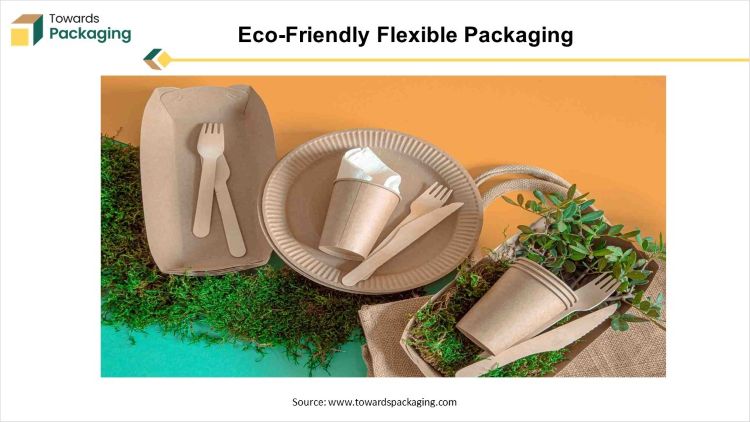
Eco-friendly flexible packaging uses lightweight materials such as recyclable PE and PP films, paper-based laminates, PLA and PHA bioplastics, and bio-based plastics made from renewable sources. These materials require fewer resources, generate less waste, and offer high customization for brands across industries.
Why It Is Gaining Momentum
The global shift toward environmentally responsible solutions is driving rapid adoption. Consumers increasingly prefer recyclable packaging, while regulators enforce strict rules to reduce plastic pollution. Flexible packaging’s light weight also lowers transportation emissions and storage requirements, helping companies reduce logistics costs and improve sustainability footprints.
Types of Sustainable Flexible Packaging Materials
Innovation is rapid, but the main categories for eco-friendly flexible materials include:
| Category | Description | Common Materials/Examples |
| Recyclable Packaging | Designed to be easily processed and turned into new products. A key focus is on mono-material structures (e.g., all polyethylene) which are easier for recycling facilities to handle than multi-material laminates. | 100% Polyethylene (PE) films, Recyclable PP (Polypropylene) films, Paper-based packaging. |
| Compostable/Biodegradable | Materials that break down naturally into non-toxic components, returning to the earth. Compostable materials break down quickly and completely in a specific environment (industrial or home compost). | PLA (Polylactic Acid, made from corn starch or other renewable resources), PHA (Polyhydroxyalkanoates), Compostable cellophane, Sugarcane fiber (Bagasse). |
| Post-Consumer Recycled (PCR) | Packaging made from materials that consumers have already used and recycled (e.g., old milk jugs turned into new packaging film). | PCR resins (e.g., PCR PET or PCR PE) blended into new films and pouches. |
| Bio-Based/Bioplastics | Plastics derived from renewable sources like corn starch, sugarcane, or cellulose, rather than fossil fuels. They are not always biodegradable or compostable. | Bioplastics (can be recyclable, compostable, or neither), Cellulose-based films. |
Clear Advantages for Businesses and Consumers
Eco-friendly flexible packaging offers several benefits that make it a preferred choice across markets. It reduces material consumption, lowers carbon emissions, and enhances design flexibility. Brands can integrate resealable features, advanced printing, and barrier performance while maintaining sustainability goals. Its space-saving design also improves packaging efficiency throughout the supply chain.
Challenges on the Road to Sustainability
Despite its potential, the industry faces challenges. Recycling infrastructure for flexible materials remains limited in many regions, and eco-friendly materials often cost more than traditional plastics. Compostable films may offer weaker barrier properties, and consumer confusion around recyclability sometimes limits proper disposal. Overcoming these challenges requires investment in waste management systems and clearer labeling.
A Market Evolving Toward Circular Solutions
Global demand for sustainable packaging is rising as brands commit to reducing plastic waste. Food and beverage remains the largest user of flexible formats, but personal care, pharmaceuticals, and household products are quickly adopting eco-friendly alternatives. Companies are investing heavily in mono-material films, recycled content, and biodegradable materials to meet sustainability targets.
Comparing Key Eco-Friendly Materials
Recyclable plastics like PE and PP offer strong performance and cost advantages, especially when produced as mono-material structures. Bio-based plastics help reduce dependence on fossil fuels, while compostable films break down in controlled environments and support zero-waste initiatives. Paper-based flexible packaging appeals to consumers, though it may require specialized coatings for barrier protection.
Country-Wise Adoption Trends
United States: Growing adoption of recyclable and PCR-based packaging driven by retailer sustainability goals.
Europe: Leading the global shift with strict circular economy regulations and high use of recyclable mono-material structures.
China: Increasing focus on biodegradable and compostable materials as part of national waste reduction plans.
India: Strong demand driven by plastic waste rules and rising use of recyclable packaging in FMCG and e-commerce.
Japan: Advanced recycling systems encourage high-barrier recyclable and bio-based materials.
Key Industry Trends Shaping the Future
The industry is rapidly evolving with trends such as mono-material films replacing complex laminates, higher use of post-consumer recycled content, and growing interest in compostable and paper-based alternatives. Brands are adopting digital printing to reduce waste and integrating refill-and-reuse systems to further cut plastic use.
A Sustainable Shift That Is Here to Stay
Eco-friendly flexible packaging is no longer optional it is a strategic necessity for companies aiming to stay relevant in a sustainability-conscious market. As technology advances and recycling infrastructure improves, flexible packaging will continue to lead the transition toward a circular economy. Businesses that embrace innovative materials and eco-friendly formats today will be better positioned to meet future regulations, satisfy consumer expectations, and build a resilient, responsible brand for the long term.
About Author:
Yogesh Kulkarni is an experienced Research Analyst specializing in the packaging sector, with a strong foundation in statistical analysis and market intelligence. He currently contributes his expertise to Towards Packaging.
Source : https://www.towardspackaging.com/insights/eco-friendly-flexible-packaging-market-sizing