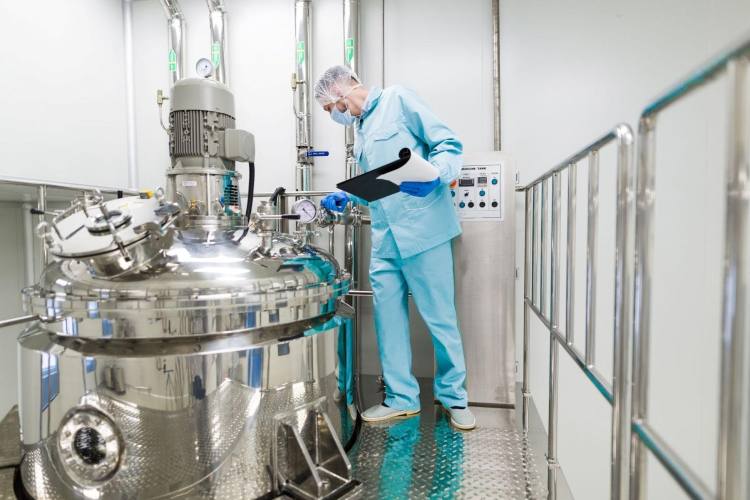
The global fermentation market is expanding rapidly, driven by demand for enzymes, active pharmaceutical ingredients (APIs), biochemicals, probiotics and alternative proteins. As growth continues to accelerate, so does pressure on manufacturers to not only innovate but also to scale efficiently.
While product concepts may be proven at lab scale, many companies encounter quality and variability issues at scale as production volume increases.
Global Lead Expert in Bionutrients at Ohly, Alessandro Ciranna, has provided his insights into yeast-derived bionutrients to explain why reproducibility is becoming a defining factor in industrial fermentation performance – and how to avoid the high hidden costs of variability.
The hidden costs of fermentation variability
Fermentation variability is rarely visible until it becomes expensive. In competitive markets, where global demand continues to grow year-on-year, manufacturers cannot afford unpredictability.
1. Batch failure: Severe deviations in fermentation performance can result in the loss of an entire batch, wasting raw materials and production time as well as valuable bioreactor and downstream processing capacity.
2. Reduced yield: Even a modest reduction in yield can dramatically affect cost per kilogram in high-volume enzyme or alternative protein production.
3. Extended fermentation time: Reduced productivity can delay turnaround, reducing plant throughput and affecting the reliability of the supply.
Why nutrient variability is often the root cause
Even minor fluctuations in fermentation conditions can impact reproducibility. Changes in temperature, pH, or agitation can lead to substantial changes in growth rates or metabolite profiles. This means that maintaining precise control over fermentation conditions is critical for reproducibility.
One of the most overlooked contributors to fermentation variability is nutrient inconsistency. Many complex natural nutrient sources commonly used in microbial fermentation, such as plant-derived proteins or yeast extracts produced from spent brewer’s yeast, are inherently variable:
- Agricultural raw materials can often fluctuate due to seasonality, geography, and crop conditions.
- Brewer’s yeast extracts originate from spent fermentation biomass, and their composition can vary depending on the brewing process
With these complex raw materials, amino acid and peptide profiles, as well as micronutrient levels, can vary between batches. Such inconsistencies may in turn influence microbial growth behaviour and overall fermentation outcomes.
How consistent bionutrients help to improve reproducibility
To achieve reproducible outputs, manufacturers must start with consistent inputs. Yeast-derived bionutrients can offer a controlled, stable nutritional foundation for microbial growth. These can be produced with:
- Proprietary yeast strains
- Carefully selected raw materials for yeast propagation
- Controlled fermentation and extraction processes
- End-to-end manufacturing oversight
If produced with care and expertise under tightly controlled manufacturing conditions, yeast-based bionutrients provide consistent amino acid and peptide profiles, micronutrient stability, and reliable bioavailability to support:
- Steady and robust microbial growth
- Consistent metabolic activity
- Predictable yields and productivity
- Reduced batch-to-batch variation
- Simplified scale-up
- Stronger regulatory documentation
This means that rather than constantly troubleshooting any deviations, R&D and production teams can focus on optimisation and performance enhancement.
Alessandro Ciranna, Global Lead Expert in Bionutrients at Ohly, says:
“As fermentation continues to transform food manufacturing, health applications, and sustainable protein production, reproducibility will define the market leaders.
While innovation may begin at the lab level, commercial success has, and continues to, depend on industrial consistency. By strengthening nutrient precision and reducing variability at the source, manufacturers can move confidently from pilot scale to full production, protecting margins and building trust with customers at the same time.
We encourage manufacturers using fermentation technologies to partner with suppliers who maintain end-to-end control of the manufacturing process, reducing variability introduced by fragmented supply chains.
At Ohly, we use advanced PRECISION EXTRACTIONTM techniques to produce our highly consistent X-SEED® bionutrients. These products provide a balanced composition of key nutritional components like free amino acids, peptides, vitamins, minerals and other growth factors to support reproducible fermentation outcomes across batches and scales.”